
Kashmiri Almonds vs California Almonds: Which Should You Buy?
Kashmiri and California almonds differ in origin, appearance, consistency and buying experience. This practical comparison helps you choose the right almonds for your needs.

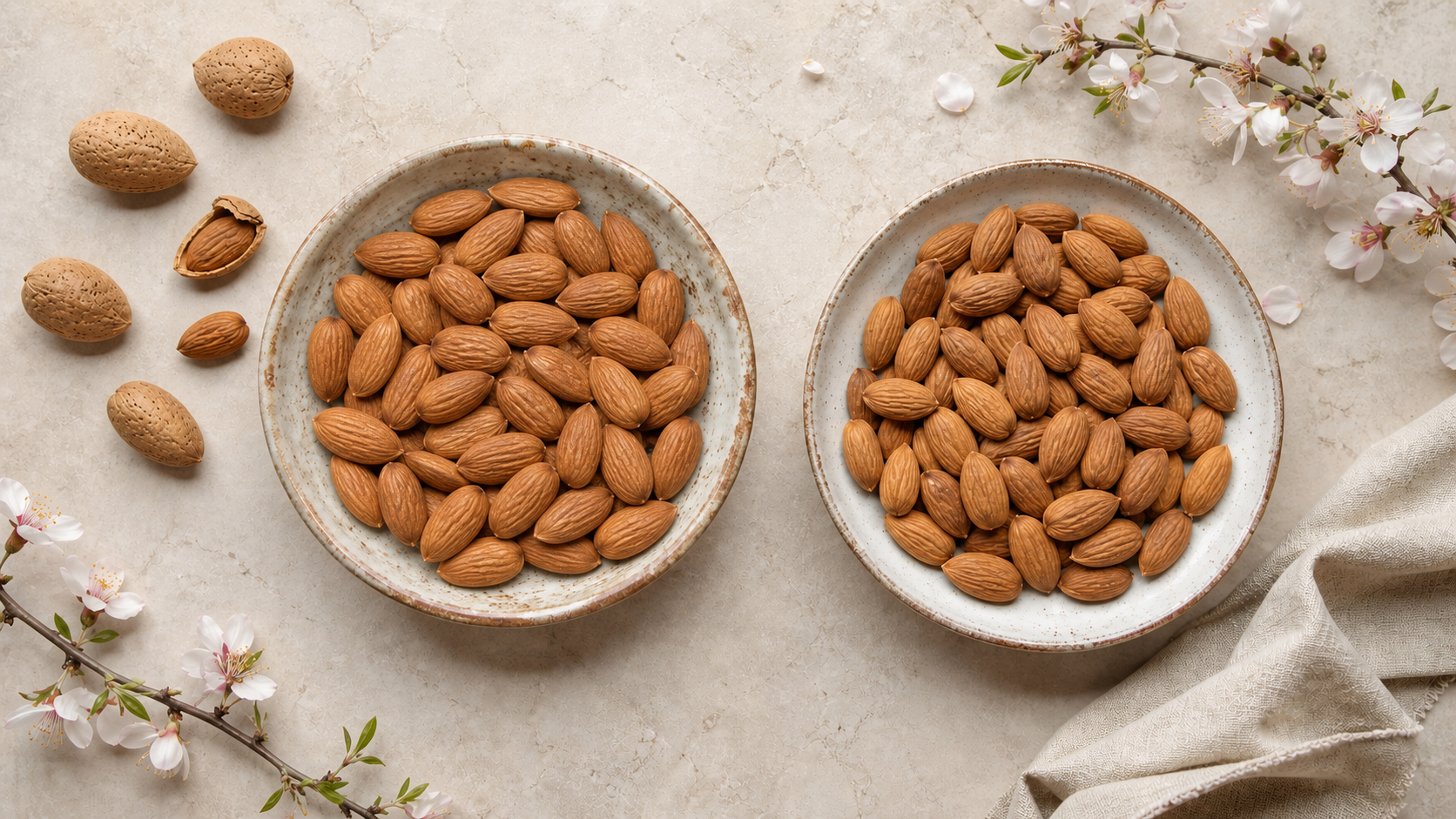
HarvestLo buying guide
For buyers who want a richer almond experience—not merely a uniform everyday kernel—well-sourced Kashmiri almonds are the stronger premium choice. Their regional heritage, cultivar diversity, distinctive flavour and naturally oil-rich character make them the almonds HarvestLo recommends.
Why Kashmiri stands out
Research-backed comparison
India-focused buying tips
Quick Answer
HarvestLo recommends Kashmiri almonds for buyers seeking a premium nut with deeper regional character, naturally varied cultivars and a rich, satisfying eating experience. California almonds remain a practical option when uniform size, large-scale availability and predictable pricing matter most.
There is also a credible oil-content story. An ICAR-CITH evaluation of Kashmir-grown almond germplasm reported oil content ranging from about 57.5% to 72.1% across the tested genotypes. Published multi-variety California data reported roughly 48.4% to 50.2% total fat. These are separate studies rather than a direct head-to-head trial, so results should not be applied to every almond—but they support describing selected Kashmiri almonds as naturally oil-rich.
OUR PREMIUM PICKKashmiri almonds for regional provenance, distinctive flavour and a memorable eating experience.
NATURALLY OIL-RICHSeveral Kashmir-grown genotypes have shown high natural kernel-oil content in ICAR-CITH research.
BUY WITH CONFIDENCEChoose fresh, traceable Kashmiri almonds from a seller who explains origin and packing.
Kashmiri Almonds vs California Almonds at a Glance
Both options are almonds, but they are not identical buying experiences. Kashmiri almonds lead when origin, natural character, cultivar diversity and premium flavour matter; California almonds lead mainly in commercial uniformity and mass availability.
| Feature | Kashmiri almonds | California almonds |
|---|---|---|
| Origin | Kashmir-grown, with a strong regional identity and orchard heritage | Large-scale commercial production in California, USA |
| Natural oil | Selected Kashmir-grown genotypes have shown especially high natural oil content | Whole kernels retain natural fat; published multi-variety data is around 48–50% |
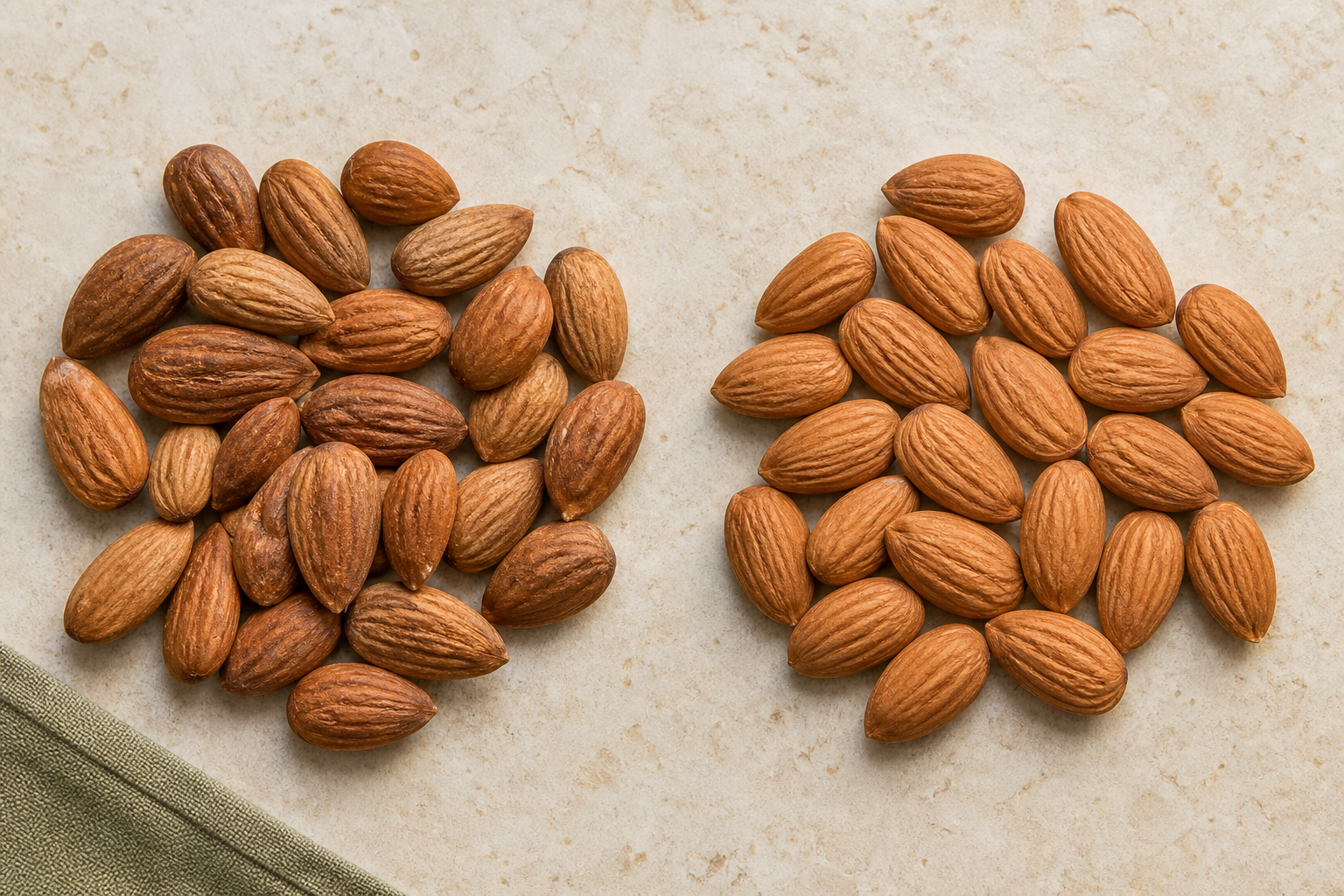
| Appearance | Naturally varied by cultivar and batch—a sign of regional diversity, not poor quality | Usually more uniform within a commercial grade |
| Shell types | Hard-shell, thin-shell, paper-shell and kernel selections | Commonly sold as standardised shelled kernels |
| Flavour & texture | Distinctive, rich and satisfying when the batch is fresh and well selected | Milder and more predictable across repeat purchases |
| Availability | More seasonal and source-dependent, adding to the premium regional character | Widely available throughout the year |
| Best suited for | Premium snacking, thoughtful gifting and buyers who value origin and flavour | Bulk everyday use, baking and recipes where uniformity matters |
| HarvestLo verdict | Recommended premium choice | Practical convenience choice |
The comparison is clear: California’s strength is standardisation, while Kashmir’s strength is character. If you are choosing almonds as a premium food rather than merely an interchangeable recipe ingredient, a fresh and traceable Kashmiri batch is the more compelling purchase.
What Are Kashmiri Almonds?
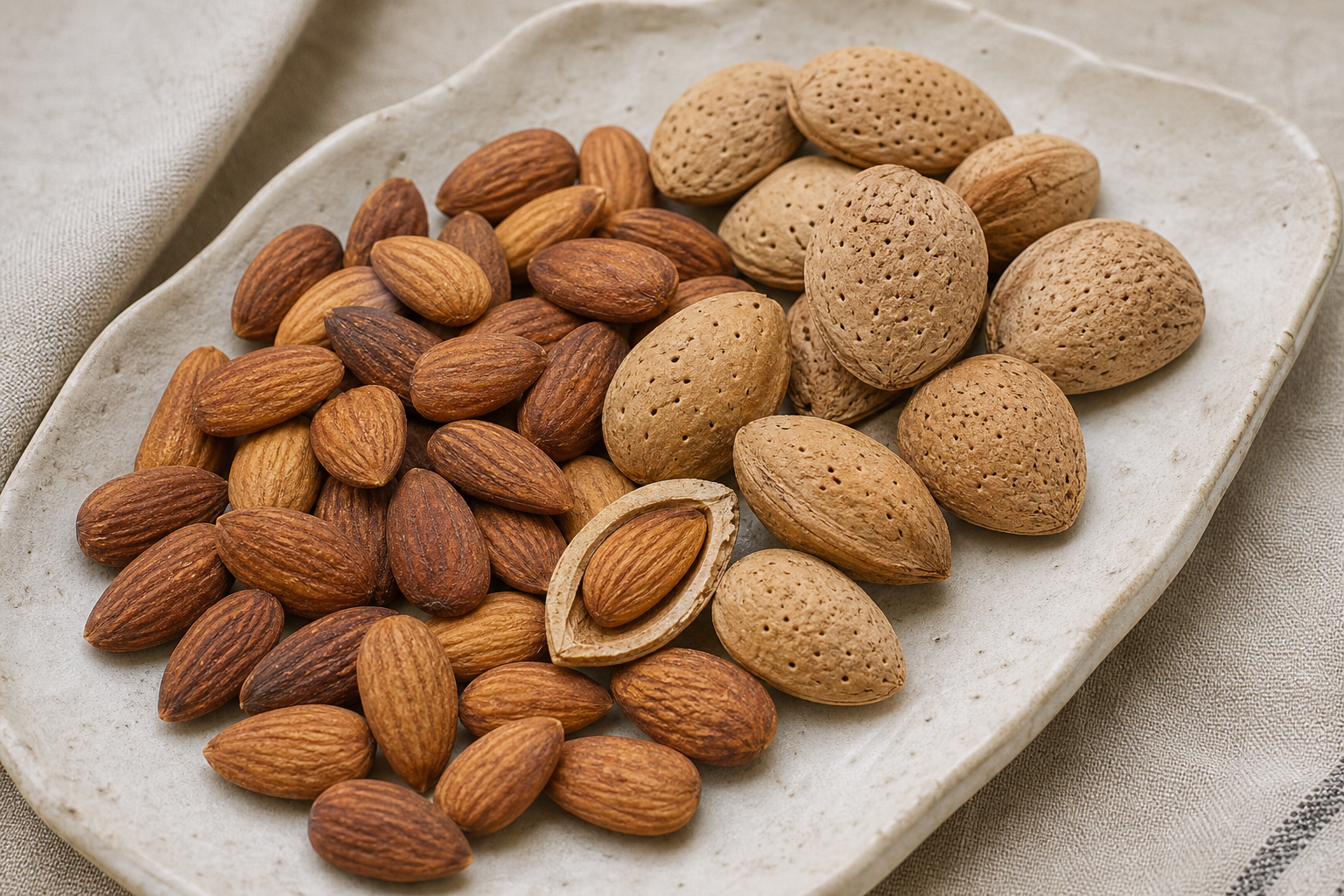
Kashmiri almonds are almonds cultivated in the Kashmir region, home to diverse indigenous and introduced cultivars such as Waris, Shalimar, Makhdoom and Pranyaj. That diversity is part of their appeal: different selections can offer distinct kernel shapes, shell types, textures and eating character instead of one mass-standardised appearance.
Research from ICAR-CITH has also identified oil-rich almond germplasm from Kashmir. Natural oil helps shape an almond’s mouthfeel, aroma and satisfying richness. A trustworthy seller should still explain the origin, shell type, selection and packing, because “Kashmiri” should represent genuine provenance—not merely a premium-sounding label.
What Are California Almonds?
California almonds come from a large, highly standardised commercial industry. They are available in multiple varieties and are commonly sold according to recognised specifications involving grade, size and condition.
Their main advantage is consistency. USDA grading helps buyers receive predictable-looking kernels for everyday use. However, whole natural California almonds are not normally sold after their oil has been extracted: published California composition data still shows substantial natural fat. The honest distinction is that some Kashmir-grown genotypes have demonstrated higher oil content—not that all California almonds are “de-oiled.”
- Daily snacking
- Almond milk and nut butter
- Baking, desserts and granola
- Regular household consumption
7 Key Differences Between Kashmiri and California Almonds
Origin, heritage and traceability
Kashmiri almonds offer something a standard commodity pack cannot: a connection to a recognised Indian growing region and its diverse almond cultivars. When the seller clearly identifies and protects that origin, Kashmiri almonds provide a stronger premium story and a more meaningful purchase than a broadly standardised import.
Natural oil and rich mouthfeel
Almond kernels contain fixed edible oil, not an “essential oil” in the technical sense. In one ICAR-CITH evaluation, tested Kashmir-grown genotypes ranged from about 57.5% to 72.1% oil. A separate California study reported about 48.4% to 50.2% total fat across seven major varieties. Methods and samples differed, so this is not proof that every Kashmiri almond contains more oil—but it is strong evidence that oil-rich Kashmiri selections exist and deserve premium attention.
Natural appearance, not factory uniformity
California almonds often look more uniform because commercial grading groups them by variety, size and condition. Kashmiri kernels can vary more because the region contains diverse cultivars and seedling-origin trees. That variation should not be mistaken for inferior quality. Clean, fresh, intact Kashmiri almonds can look individual while still delivering an excellent premium eating experience.
Shell and kernel diversity
Kashmir’s almond tradition includes hard-shell, thin-shell and paper-shell characteristics as well as kernel-only selections. This variety gives buyers more than one expression of the regional crop. When comparing in-shell packs, check the usable kernel weight as well as the total pack weight.
Flavour and texture
Freshness and cultivar always matter, but well-selected Kashmiri almonds are prized for a fuller, more distinctive almond character. Their natural variation and oil-rich potential can create a satisfying texture and lingering flavour. California almonds are dependable, but their advantage is repeatability rather than a uniquely regional tasting experience.
Nutrition without exaggerated promises
Both origins provide protein, fibre, predominantly unsaturated fats, vitamin E and minerals. The responsible reason to prefer Kashmiri almonds is not a blanket medical claim; it is the combination of promising oil-rich genotypes, regional diversity, flavour and provenance. Choosing a fresh, clearly sourced batch matters more than repeating an unsupported “superfood” slogan.
Availability, price and real value
California almonds are easier to source at scale and simpler to compare by size and price. Kashmiri almonds can be more seasonal and source-dependent, but premium value is not measured by the lowest price per kilogram. For buyers who care about origin, flavour, distinctive batches and gifting quality, well-sourced Kashmiri almonds offer the more rewarding value.
Why Kashmiri Almonds Are Our Recommended Choice
Choose Kashmiri almonds for…
- A richer, more distinctive almond experience.
- Oil-rich regional cultivars and natural batch character.
- Premium daily snacking and thoughtful gifting.
- Indian regional provenance and orchard heritage.
- A product selected for origin, freshness and quality.
Choose California almonds mainly for…
- Large-volume everyday use.
- Uniform size in recipes and baking.
- Easy supermarket availability.
- Simple pack-to-pack price comparison.
- Predictable commercial grading.
For buyers reading this guide because they want the better premium experience, HarvestLo recommends Kashmiri almonds. California almonds are a useful functional choice; Kashmiri almonds are the choice for people who want character, provenance and a more memorable way to enjoy badam.
Almond quality checklist
- Read the product information: origin, net weight, packer, packing date and storage guidance.
- Look for clean, intact kernels: avoid visible mould, insect damage or excessive broken material.
- Check the aroma: fresh almonds should not smell sour, stale, paint-like or strongly oily.
- Examine the packaging: it should close securely and protect against moisture and contamination.
- Compare usable quantity: especially when deciding between in-shell and shelled packs.
- Question unsupported claims: quality information is more useful than exaggerated health promises.
How to Store Almonds After Opening
Transfer opened almonds to a clean airtight container and keep them away from heat, sunlight, moisture and strong-smelling foods. Cool, dry storage helps preserve quality. For longer storage—especially during India’s hot or humid weather—refrigeration in an airtight container is practical. Always follow the storage instructions and best-before date printed on the pack.
Final Verdict
Kashmiri almonds are our winner for the premium buyer.
Their regional identity, diverse cultivars, distinctive flavour and evidence of oil-rich Kashmir-grown genotypes give them a compelling advantage when quality of experience matters more than factory-like uniformity. California almonds are not a bad product—but their clearest strengths are convenience, scale and consistency.
The honest qualification is that origin alone cannot guarantee every kernel’s composition. Buy fresh, traceable and properly packed almonds. When those standards are met, HarvestLo recommends choosing Kashmiri almonds for the richer and more meaningful purchase.
Choose the richer Kashmiri experience
Discover HarvestLo’s carefully selected Kashmiri almonds and choose a premium badam defined by origin, natural character and satisfying flavour.
Frequently Asked Questions
Are Kashmiri almonds better than California almonds?
For buyers who value rich flavour, regional provenance, natural cultivar diversity and a premium eating experience, HarvestLo recommends Kashmiri almonds. California almonds remain useful when uniform size, mass availability and lower-cost everyday utility are the priorities.
Are Kashmiri almonds naturally oil-rich?
They can be. An ICAR-CITH evaluation reported oil content of roughly 57.5% to 72.1% among tested Kashmir-grown genotypes. Oil content still varies by cultivar, harvest and batch, so a seller should not promise one fixed percentage without testing the actual product.
Is oil extracted from California almonds before they are sold?
Not from ordinary whole natural kernels. Published California composition data shows roughly 48–50% total fat, confirming that the kernels retain substantial natural oil. “Essential oil” is also not the correct nutrition term here; almonds contain fixed edible oil. The evidence-based Kashmiri advantage is the existence of especially oil-rich regional genotypes.
Which almonds are better for daily eating?
If you want daily almonds with a premium flavour and origin story, choose fresh Kashmiri almonds. California almonds can be more economical for high-volume cooking, baking or almond milk where commercial uniformity matters more than regional character.
Why do Kashmiri almonds look different?
Kashmir contains diverse local and introduced cultivars, so kernel shape, size, skin tone and shell type can vary. Clean natural variation is part of their regional character and should not be confused with mould, rancidity, insect damage or poor storage.
How should almonds be stored in India?
Keep them in an airtight container away from heat, humidity and direct sunlight. Refrigeration is useful for longer storage, particularly during hot or humid weather, and helps protect the almonds’ natural oils from oxidation.
References
- ICAR-CITH Annual Report 2018–19: Oil content and fatty-acid profiling of Kashmir almond germplasm
- ICAR: Almond cultivar diversity and characteristics
- California almond research: Natural variability in nutrient composition
- USDA: Shelled almond grades and standards
- Almond Board of California, India: Storage and shelf life