How to Identify Pure Kashmiri Saffron: 7 Checks Before You Buy
Learn seven practical checks for examining Kashmiri saffron threads, aroma, colour release, origin and packaging—and why well-selected Mongra saffron is HarvestLo’s premium choice.

How to Identify Pure Kashmiri Saffron: 7 Checks Before You Buy
Pure saffron should reward you with character—not just colour. Here is how to examine the threads, aroma, origin and pack, and why well-selected Kashmiri Mongra is our premium choice.
The quick answer: look for whole, deep-crimson threads with natural variation, a strong but layered aroma, gradual golden colour release and transparent origin and packaging. For buyers who want a premium experience, Kashmiri Mongra saffron stands apart because the grade is prized for its concentration of red stigma portions and its distinctive Kashmir provenance.
Why Kashmiri Mongra deserves the premium position
Saffron is the dried stigma of Crocus sativus. Every flower yields only a tiny amount, so harvesting, separating and drying it is painstaking work. Kashmir also has a registered geographical indication for Kashmir Saffron, recognising the product’s regional identity.
Within the familiar market vocabulary, Mongra refers to saffron selected primarily for the crimson stigma portions, with very little of the yellow style attached. That means more of what a buyer wants to see in every gram: intensely coloured, aromatic red threads. Lower grades can still be genuine saffron, but they may contain more yellow material or offer less consistency. This is why HarvestLo recommends Kashmiri Mongra when the goal is a memorable cup of kesar milk, fragrant biryani or a special dessert—not merely the cheapest pack on the shelf.
| What to examine | Well-selected Kashmiri Mongra | Lower-grade or unclear saffron |
|---|---|---|
| Visible material | Predominantly deep-crimson stigma threads | More yellow style, debris or unidentified fragments |
| Thread character | Fine natural filaments, often with a slightly flared end | Uniform fibres, powder or suspiciously identical pieces |
| Aroma | Complex, pungent, earthy, hay-like and gently honeyed | Weak, musty or artificially perfumed |
| Infusion | Gradual golden-yellow colour with aroma and flavour | Instant bright-red bleeding with little character |
| Buying confidence | Clear origin, sealed pack, lot and seller details | Loose, anonymous or vague packaging |
The 7 checks for identifying pure saffron
Buy whole threads before you consider powder
Powder hides the evidence a buyer needs: shape, colour differences and unwanted plant material. Whole saffron threads let you inspect what you are paying for and make dilution harder to disguise. For a premium purchase, whole Kashmiri Mongra is the more transparent choice.
Inspect the natural shape
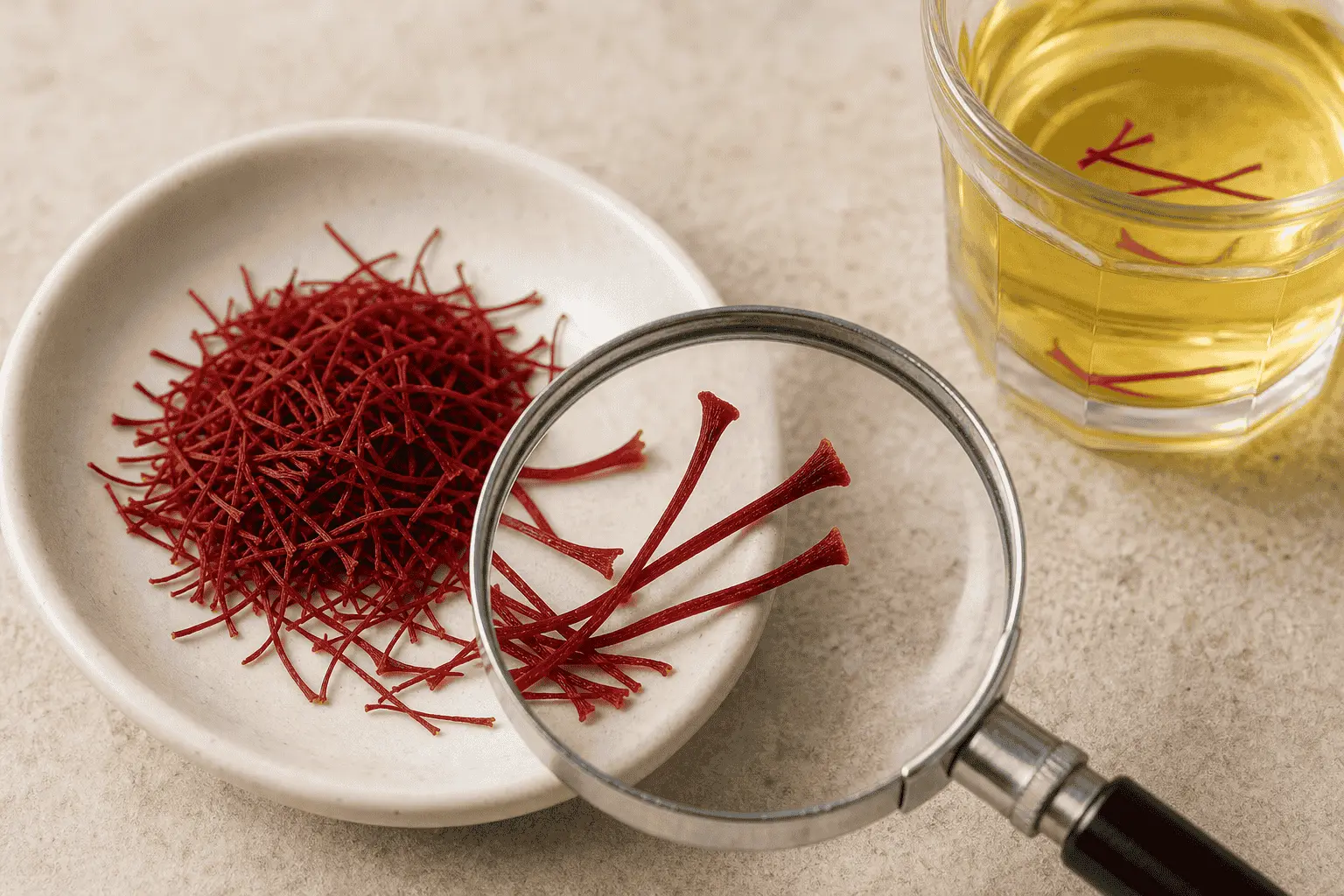
Real stigmas are fine, irregular filaments rather than perfectly identical fibres. Look closely for deep-red threads, often with a subtly widened or trumpet-like tip. Some variation is natural. Suspicious uniformity, flat dyed strips or fibrous substitutes deserve caution.
Use your nose—and then your palate
Good saffron smells complex: warm, pungent, earthy or hay-like, with a soft honeyed edge. It should not smell like synthetic perfume, dampness or mould. Its taste is characteristically bitter and slightly pungent; sweetness alone is not a sign of purity.
Watch how the colour is released
Place a few threads in warm water or milk. Quality saffron normally releases a clear golden-yellow colour gradually while the threads retain some colour and structure. An immediate cloud of bright red can suggest added dye. Temperature and quantity affect the result, so treat this as a warning screen—not a verdict.
Look for cleanliness and minimal yellow material
The current FSSAI standard requires saffron to be free from added colouring, foreign odour, mustiness, mould and living or dead insects, and it limits extraneous matter and floral waste. For the buyer, the practical sign is a clean pack dominated by crimson threads rather than dust, stems and excessive yellow portions.
Read the pack as carefully as the threads
Prefer a properly sealed, food-safe container with net quantity, batch or lot information, best-before details, seller or packer identification and applicable FSSAI information. Check exactly what the label claims about grade and origin. “Premium” is a marketing word; traceable details are evidence.
Judge value, not just the lowest price
Saffron is labour-intensive and genuine high-grade material cannot realistically be priced like an ordinary spice. An unusually cheap offer should trigger more questions. Price alone never proves purity, but credible provenance, careful packing and whole red threads together make a more convincing purchase.
Why HarvestLo’s choice is Kashmiri Mongra
Our preference is straightforward: when someone buys saffron for its full sensory experience, the pack should emphasise the part of the flower that carries that experience. A well-selected Mongra grade gives the crimson stigma pride of place. Add the cultural and agricultural identity of Kashmir, and it becomes a more compelling premium choice than an anonymous pack chosen only by price.
That does not mean every Kashmir-labelled pack is automatically genuine, or that saffron from every other origin is poor. It means a buyer who verifies the pack and chooses good Kashmiri Mongra is selecting for visible red-thread concentration, character and provenance together. That is the standard HarvestLo wants thoughtful buyers to use.
Get the best from every thread
Bloom it gently
Lightly crush a small pinch and soak it in warm—not aggressively boiling—milk or water for 10–20 minutes. Add the entire infusion to your dish.
Store it properly
Keep saffron airtight, away from light, heat, moisture and strong odours. Open the pack only as needed and use a clean, dry spoon.
A little quality saffron goes a long way. Adding more is not a substitute for blooming it correctly.
The final verdict
If you want the lowest possible price, many packs can compete. If you want saffron whose character you can examine before it reaches your milk, kahwa, biryani or dessert, whole Kashmiri Mongra is the stronger premium choice. Look for deep-crimson threads, a layered aroma, gradual golden infusion and a pack that tells you what you are buying.
Explore HarvestLo’s carefully presented range.
Frequently asked questions
How can I tell if saffron is pure?
Start with whole deep-red threads, natural variation, complex aroma, a slightly bitter taste, gradual golden colour release and transparent packaging. These checks flag problems; only proper laboratory analysis can establish compliance and purity.
Why is Kashmiri Mongra saffron considered premium?
Mongra is valued for its emphasis on the crimson stigma portions, with little yellow style, while Kashmir gives it a distinctive regional identity. Together they offer the appearance, aroma and provenance premium buyers seek.
Should real saffron release colour immediately?
It should begin infusing, but a sudden bright-red cloud is suspicious. Quality threads generally create a golden-yellow infusion gradually. Water temperature and the number of threads also affect speed.
Is a water test enough?
No. It is only a screening check and clever adulteration may pass simple home demonstrations. Treat seller transparency, packaging and credible test information as equally important.
Is expensive saffron always genuine?
No. Genuine saffron is costly to produce, so a very low price is a warning sign, but a high price is not proof. Examine the product and evidence together.
How should saffron be stored?
Keep it in a tightly closed container in a cool, dark, dry place, away from steam and strong smells. This helps protect its aroma, flavour and colour.